
China Film Group
News Center

29
2025
-
05
Chinafilm Group's distributed photovoltaic power generation project successfully connected to the grid, promoting green transformation of production
Author:
Chinafilm Group
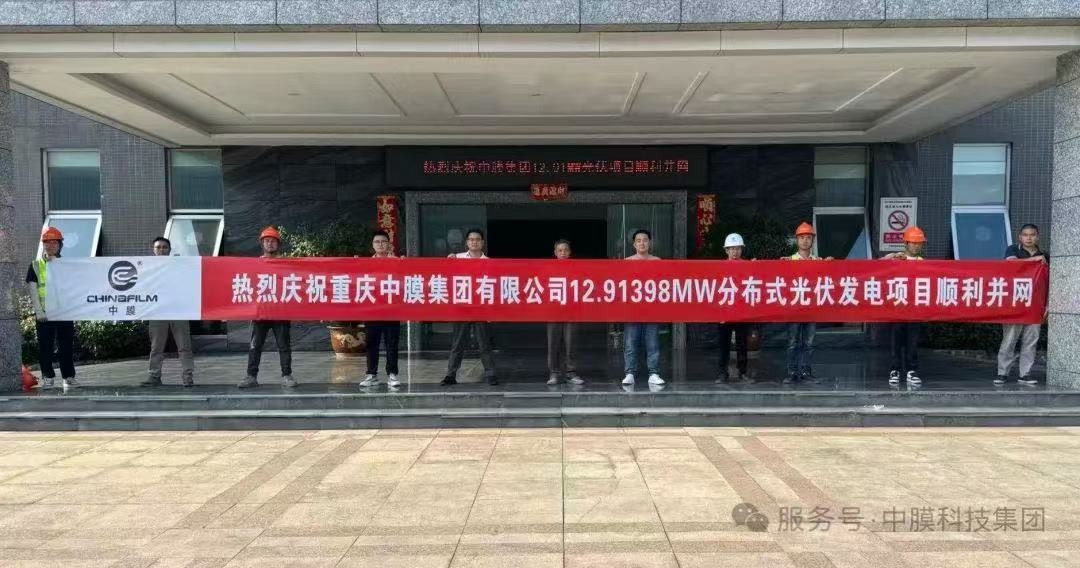 On May 29, 2025, Chinafilm Group reached a significant milestone—the official grid connection of its 12.91398MW distributed photovoltaic power generation project. The successful implementation of this project not only brought economic benefits to the company but also substantially benefited the power supply for its various projects.
The distributed photovoltaic power generation project utilizes solar energy resources to achieve efficient clean energy utilization and reduce reliance on traditional energy sources. This shift not only reduces environmental pollution but also improves the production environment, laying a solid foundation for the company's sustainable development. At the grid connection ceremony, representatives from Chinafilm Group emphasized that the successful grid connection of the distributed photovoltaic power generation project is a significant measure for the company to respond to the national green energy policy and promote sustainable development. The project can provide the company with stable clean energy, effectively reduce energy costs, and improve energy utilization efficiency. In addition, the implementation of this project has brought tangible benefits to the power supply for Chinafilm‘s various projects. Through photovoltaic power generation, reliance on traditional energy sources can be reduced, environmental pollution can be lessened, and the production environment can be improved. This measure not only improves the company's production efficiency but also enhances its market competitiveness.
Chinafilm Group stated that it will continue to increase investment in the green energy sector, explore more clean energy applications, and contribute to achieving carbon neutrality goals. At the same time, the company will actively participate in social welfare activities, give back to society, and promote harmonious social development. The successful grid connection of this distributed photovoltaic power generation project not only demonstrates Chinafilm Group's technological strength and innovation capabilities in the green energy field but also provides valuable experience and reference for other enterprises. With the continuous advancement and application of green energy technology, it is believed that more enterprises and projects will join the ranks of green energy in the future, jointly promoting sustainable social development.
This initiative by Chinafilm Group undoubtedly injects new vitality into the development of green energy and paints a beautiful blueprint for a green and low-carbon future. Through this project, the company has not only enhanced its green image but also set a model for green development for the entire industry.
Latest News
2026-07-18
AI-Powered Quality Inspection Implementation: Intelligent Technological Upgrade at the Thin-Film Factory
This article provides a comprehensive analysis of the logic behind AI‑driven quality inspection upgrades in the thin‑film industry, covering traditional pain points, the advantages of AI technology, practical application scenarios, and common pitfalls in technological transformation.
2026-07-17
Summer high-temperature winding challenges: core heating, adhesive layer sticking, glue migration, and end-face slippage.
Drawing on practical production experience from the summer season, this paper dissects the root causes of four major winding‑related faults and presents actionable process, equipment, and warehouse‑optimization solutions to help film manufacturers swiftly address high‑temperature winding challenges and reduce production losses.
2026-07-11
Why do most protective film rolls use plastic cores? A comprehensive analysis of the industry’s underlying selection logic.
This article dissects the key reasons for prioritizing plastic spools in protective film applications, examining four critical dimensions: production efficiency, quality control, long-term cost‑benefit analysis, and scenario suitability. It also contrasts the limitations of paper cores, distinguishes between mainstream plastic core materials, and outlines essential considerations to avoid common pitfalls in material selection.
2026-07-10
What are the common core types for film rolls? A comprehensive guide to selecting cores for different film materials.
This article systematically categorizes the mainstream types of film roll cores used in the industry, analyzes the advantages and disadvantages of each core type, identifies suitable film materials, and highlights key considerations for selecting the right core. Covering all major film categories—packaging, new energy, outdoor applications, and electronics—the guide helps film manufacturers and workshop process engineers quickly compare options and make informed choices.
2026-07-04
Semi-solid-state batteries are driving demand for composite separators; an analysis of high-temperature-resistant separator technologies.
This article, drawing on current mass-production technology roadmaps, key performance metrics, mainstream composite separator solutions, and selection criteria, provides a comprehensive analysis of the technical rationale behind high‑temperature‑resistant composite separators specifically designed for semi‑solid‑state batteries, offering practical, industry‑relevant insights for membrane manufacturers, battery procurement teams, and process engineers.